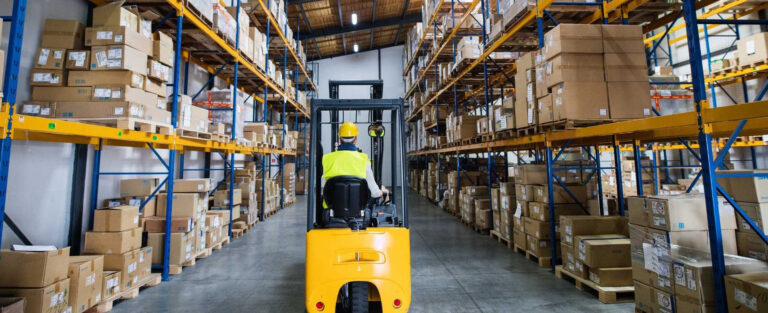
For customers, delivery looks simple: place an order and receive a parcel. Behind the scenes, fulfillment is a full warehouse workflow: inbound receiving, storage, picking, packing, labeling, handoff to carriers, and returns processing. These operations make up your fulfillment cost (3PL service cost), which is typically separate from carrier shipping charges.
In Estonia, fulfillment cost is driven less by a single “rate” and more by how much work each order requires, how inventory is stored, and what special handling rules apply. A simple, standardized operation can be priced very differently from one that needs kitting, quality checks, branded packaging, or strict compliance steps. That’s why the best way to understand fulfillment cost is to break it into components and model it based on your order profile.
What fulfillment cost includes
It helps to split logistics into three buckets:
- 3PL service fees (warehouse space + operations)
- carrier shipping fees (transportation)
- value-added services (anything beyond the standard workflow)
The 3PL portion typically covers receiving, put-away, storage, pick & pack, packaging handling, labeling, and returns workflows. Shipping is influenced by destinations, parcel characteristics, and service level. Value-added services include bundling, kitting, gift wrapping, relabeling, QC, and marketplace prep.
Typical fee components you’ll see in Estonia
Different providers package these items differently, but the underlying cost drivers are consistent.
Setup and integration
Onboarding includes process design, WMS configuration, and integration with your ecommerce platform and/or ERP. A standard integration can be quick, while multiple stores, multiple languages, custom checkout logic, or complex status flows usually require more implementation and testing.
Inbound receiving and put-away
When goods arrive, they must be counted, checked, and stored in assigned locations. Costs are shaped by how standardized your inbound shipments are: clear SKUs, consistent carton labeling, accurate packing lists, and scannable barcodes reduce warehouse handling time. Mixed cartons, missing labels, and frequent exceptions increase workload.
Storage
Storage cost depends on how space is measured (pallet-based, volume-based, shelf/bin-based) and how long inventory stays in the warehouse. Slow-moving SKUs often increase the storage share of your total cost, especially with strong seasonality. Special conditions—temperature control, security zones, quarantine/inspection areas—can also influence storage and handling requirements.
Pick and pack
This is often the largest variable cost. Order complexity is the key driver: number of lines, number of units, pick locations, and any special instructions. “One item per order” workflows are typically faster than multi-line orders with bundles, inserts, branded packing rules, or custom labeling.
Packaging and labeling
Some providers treat packaging materials as a separate line item, while others include a basic standard. Costs depend on packaging type (box vs mailer), protection requirements, branding elements (inserts, custom tape), and labeling/documentation rules.
Returns
Returns involve more than receiving a parcel back. A proper workflow includes condition checks, decisions (restock, repackage, quarantine, dispose), and inventory updates. The more inspection and refurbishment steps you need, the more labor your returns process requires.
How to estimate fulfillment cost without guessing
Even without exact rates, you can model your cost structure by separating fixed and variable components and estimating an average cost per order.
A simple approach:
- list your monthly fixed items (storage, systems, minimum service fees)
- define your variable workflow per order (picking, packing, labeling, packaging handling)
- forecast returns based on your category and internal history (return share + handling intensity)
- keep carrier shipping as a separate estimate so you can see what changes come from transport vs warehouse operations
This structure makes it easier to compare providers and avoid hidden cost surprises.
Example estimation logic for an ecommerce store
To build a practical forecast, describe your operation using operational parameters rather than prices:
- orders per month (and peak months)
- average lines per order (distinct products)
- average units per order
- typical parcel size/weight category (small/medium/large; light/standard/heavy)
- storage needs (how much space; how long stock sits)
- returns rate and what “returns processing” means for your products
Providers can map these parameters to their pricing model, and you can use the same parameters to compare scenarios.
What changes fulfillment cost the most
Order complexity
More lines, more units, more exceptions, and more value-added steps increase labor time per order.
Parcel profile (size, weight category, fragility)
Bulky items require larger packaging and more handling, and they also push shipping costs up. Compact items are typically easier and faster to process.
Seasonality and peaks
If volume spikes, you need to understand staffing capacity, cut-off times, and whether service level expectations change during peak periods.
Special handling and compliance
Expiration-date checks, serial numbers, regulated goods rules, temperature sensitivity, and strict QC requirements add steps and slow down the workflow.
How to reduce fulfillment cost in Estonia
- Standardize packaging rules and limit the number of packaging variants.
- Keep fast-moving items in the easiest pick locations.
- Consider pre-kitting frequent combinations if it reduces pick time overall.
- Reduce preventable returns through better product info (dimensions, photos, instructions).
- Audit your SKU assortment: slow movers can inflate storage needs.
- Define clear operational KPIs and SLAs (processing speed, error rate, returns handling time).
What a 3PL typically needs to quote your project
Most providers will ask for:
- monthly order volume and peaks
- average lines and units per order
- parcel profile categories and packaging rules
- SKU count and velocity split (fast vs slow movers)
- storage requirement type (pallet/volume/shelves)
- shipping destinations and channels
- integrations (store platform, ERP, marketplaces)
- special requirements (expiry, serials, temperature, regulated goods)
The more clearly you describe these inputs, the more accurate and scalable the fulfillment proposal will be.